Stand inside a vertical Chinese city
Chongqing is built from hills, rivers, bridges, stairs, elevated roads and dense layers, making urban geography the main experience.
3-4 days · Chongqing / Wulong
Walk between grey-tiled lanes and high-rise skylines. Watch Hongya Cave glow above the river, then linger over a Chongqing evening.
A first taste of the mountain city
Come for a city that rises in layers: tiled roofs below tower blocks, old lanes cut into the hillside, and bridges glowing above the river. For a first visit, these are the three experiences we would put at the heart of a city stay.
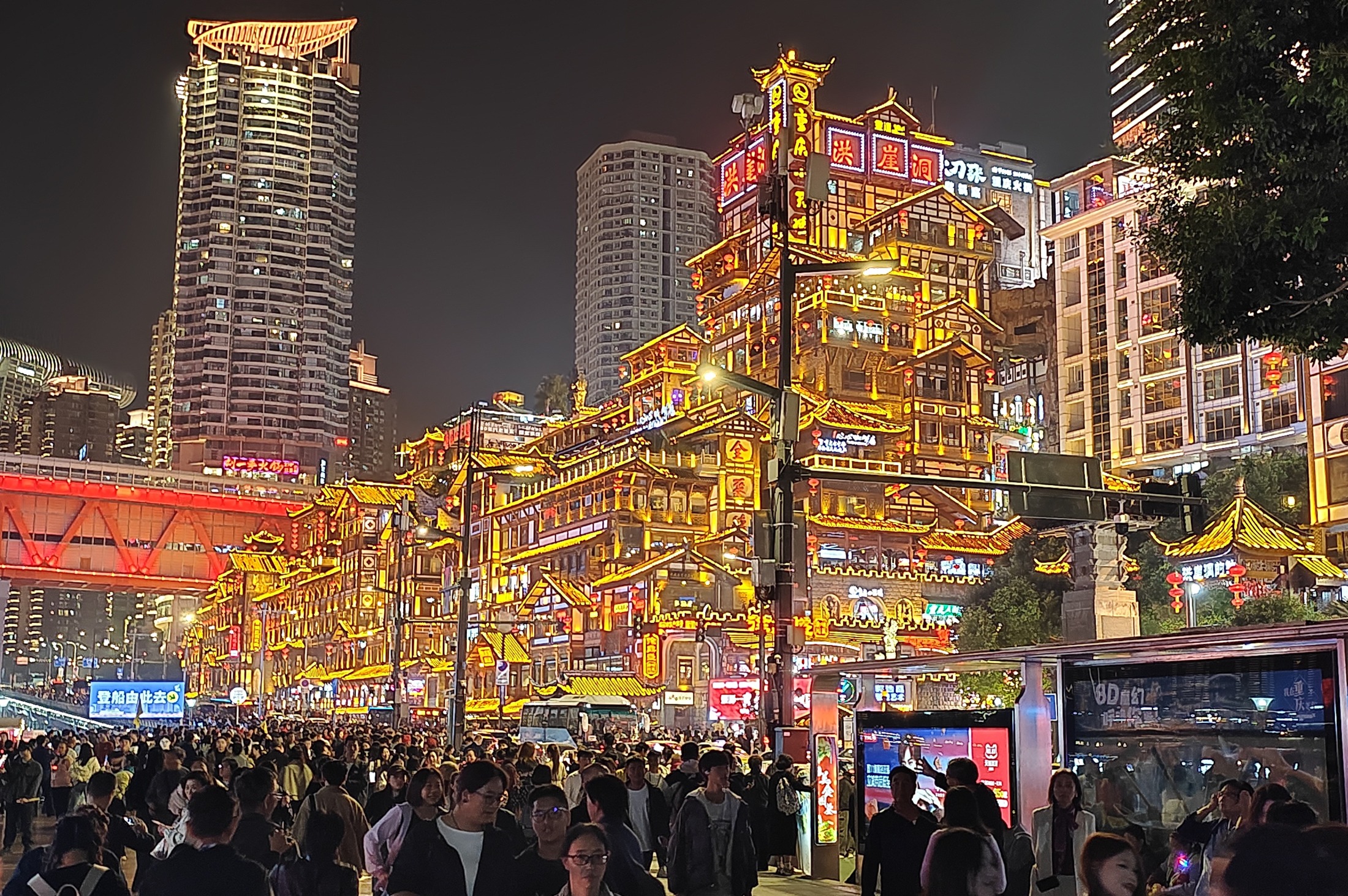
Hongya Cave’s stacked, traditional-style facades make one of Chongqing’s most recognisable night scenes. The pleasure is in seeing the whole illuminated shape against the modern skyline, then noticing balconies, roofs and the river below.
What to do: arrive with time to see the change from daylight to evening, pause at the public riverside viewing areas and look back towards the complex. Treat the shops as an optional browse; leave room for the view itself.
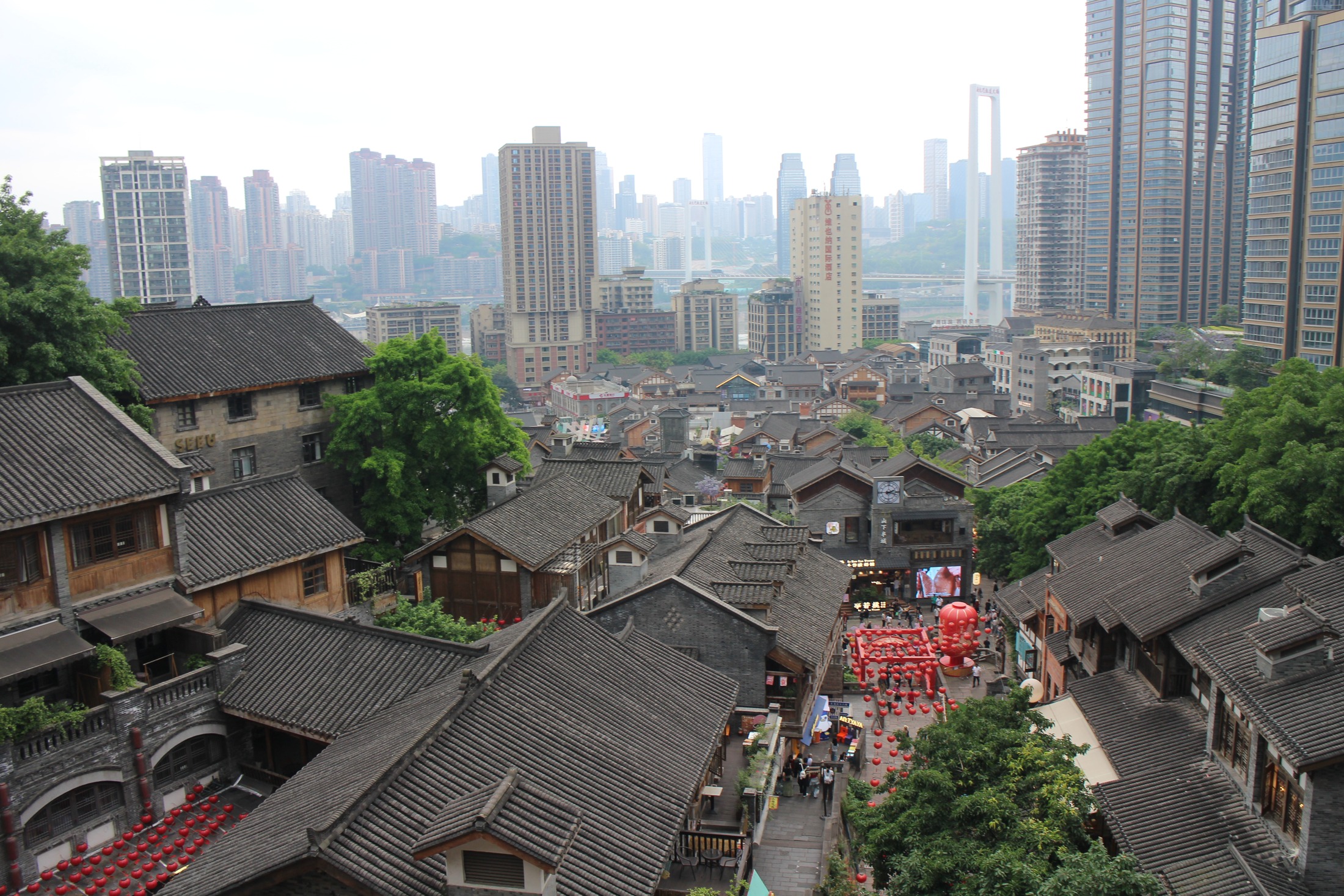
At Shibati, the contrast is the attraction: sloping lanes, wooden-looking facades and grey roofs sit below a wall of high-rises. This restored visitor district makes Chongqing’s upper-and-lower-city geography easy to see.
What to do: explore one section of the stepped streets, look back uphill for the roofline, and stop for a drink or snack when something catches your eye. Browse at your own pace rather than treating every shop as a required stop.
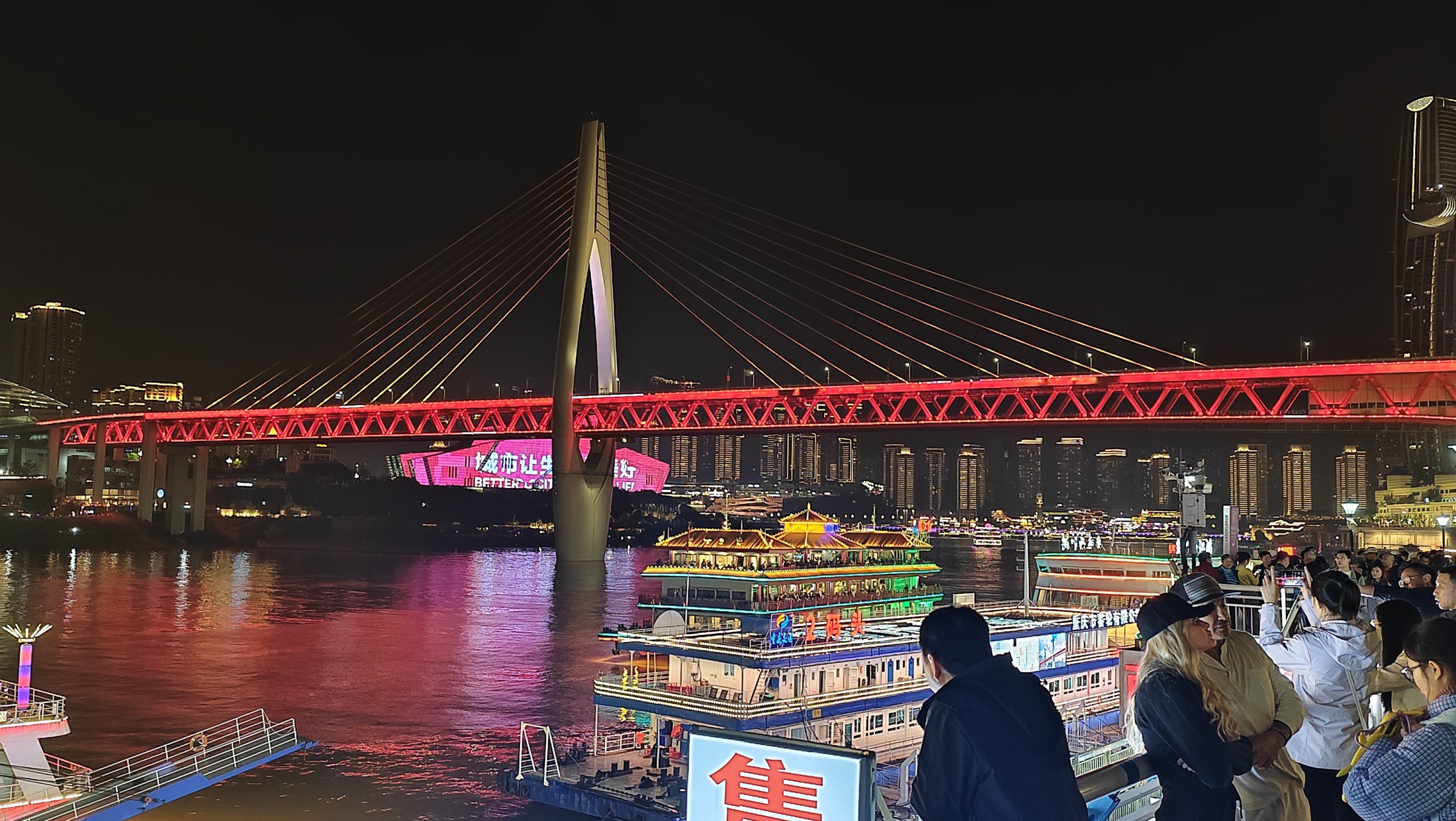
The red bridge, moving boats and reflections show a different side of the same city. From the riverside near Hongya Cave, Qiansimen Bridge frames the Jialing River and the skyline across the water.
What to do: leave time after sunset to watch the scene rather than hurry to another photo stop. Pair a river-view pause with dinner: Chongqing noodles for a shorter meal, or hotpot for a longer shared evening.
Turn the highlights into an outing
Our suggested order is Shibati in the afternoon → a dinner break → Hongya Cave and the river after dark. It links daytime street texture with a night scene, rather than repeating three similar viewpoints. Shibati is a separate stop, not a claim that all three form one flat, continuous walk. Use a short transfer where it suits your party.
Steps: Shibati has changes of level; choose a shorter section if stairs are tiring. Evening crowds: pause only in permitted viewing areas and keep crossings clear. Timing: sunset, weather and lighting can vary; check current local information instead of planning around a guaranteed lighting minute.
First Landing can combine these city experiences with transport, accommodation and guiding around your interests. Start with what appeals most—old streets, night photography or food—and we will shape the route around it.
Plan My Chongqing TripDestination context: Chongqing Municipal Government: Yuzhong’s urban layers and restored Shibati · Qiansimen Bridge. Suggested priorities and sequence are First Landing’s planning recommendations.
Route Promise
Chongqing is for travelers who want a city that feels physically different: vertical streets, river crossings, bridges, cliffside density, night views and bold food. The route should be planned carefully because the city can feel intense. With Wulong's Three Natural Bridges, it becomes an urban-and-nature contrast route; without Wulong, it can stay as a strong 3-day city experience.
Best for: Travelers who want urban energy, food, night scenes and distinctive geography.
Pace: Energetic in the city, more scenic and transfer-based if Wulong is included.
Why This Route
Chongqing is built from hills, rivers, bridges, stairs, elevated roads and dense layers, making urban geography the main experience.
The night scene should lead into river viewpoints, bridges, neighborhoods and how people live in a mountain city.
Hotpot shows communal bold-flavor culture, while Wulong's karst landscapes give the route a nature counterpoint when time allows.
Choose Your Pace
Best for guests who want night views, food, urban layers and a shorter high-energy stop.
Adds a scenic contrast, but needs more transfer time and a more realistic pace.
Keeps the route highly atmospheric, with hotpot, markets, bridges and river viewpoints.
Itinerary-Led Story
This route works best when the major sights appear in a clear order, with pacing adjusted around comfort, transfers, weather and the traveler's interests.
Let travelers feel Chongqing's vertical shape before adding too much movement.
Chongqing's first impression should focus on geography: rivers, bridges, hills, elevated roads and layered streets. A night-view plan around Hongya Cave or river viewpoints can be powerful, but it needs crowd-aware timing and safe transfer planning.
Why it mattersThe city is memorable because it is vertical and river-shaped. Travelers should understand that before chasing isolated photo spots.
How to pace itArrival day should stay compact: viewpoint, dinner and a controlled night scene rather than a long route across town.
Food layerHotpot or local noodles can be adjusted by spice level so the first night feels exciting but not uncomfortable.
Make the city legible instead of only dramatic.
The second day can connect Changjiahui, a Yangtze River Cableway crossing, river ferry or Raffles viewpoint with Ciqikou, Liziba and lived-in neighborhoods. Chongqing works best when the route explains how people live with stairs, slopes, metro lines, bridges and dense city layers rather than collecting disconnected photo stops.
What to noticeThe attraction is the whole urban form: elevation changes, river crossings, hillside buildings and lived-in street texture.
Planning detailWalking and stairs comfort should be checked before promising too much. Private transfer points matter.
Food comfortHotpot, noodles, small snacks and market stops can be chosen around spice tolerance and meal timing.
Use the third day to make Chongqing feel lived-in.
A city-only third day can be stronger than forcing a transfer. This day can connect xiaomian, hotpot, older streets, river viewpoints, markets, metro or bridge moments and neighborhoods so visitors understand Chongqing as a lived-in mountain city.
Why it mattersForeign visitors often remember Chongqing for its total urban form, not only one night-view spot.
Food layerXiaomian, hotpot, snacks and market stops make the city sensory without reducing it to heat.
Planning detailWalking load, stairs, weather and transfer points need to be controlled so the city feels exciting rather than exhausting.
Make Wulong a real contrast, not a repeat of Day 3.
A fourth day can take the route out of the dense city and into Wulong's karst scenery, especially the Three Natural Bridges, with Fairy Mountain added only when transfer time, weather and group mobility allow. This is the right place for nature impact, but it needs an early start and honest walking expectations before quotation.
Why include itWulong gives Chongqing a clear urban-and-nature contrast instead of another city day.
When to skip itIf time is tight or the group is tired from stairs and city walking, a deeper city route can be stronger.
Comfort noteTransfer time, walking level and return timing need to be discussed before quotation.
Traveler Context
Chongqing shows a kind of Chinese city that is hard to understand until you stand inside it: hills, two rivers, bridges, stairs, elevated roads, dense buildings and night views layered over each other. It is urban geography as travel experience.
Hongya Cave should not be treated as the whole city. It is a visual entry point into Chongqing's cliffside density, riverside night economy and layered vertical streets. The route should connect it with viewpoints, bridges and real neighborhoods.
Chongqing hotpot is not only heat. It carries the city's dockside, communal and bold-flavor personality: beef-tallow broth, mala aroma, shared tables, noodles, snacks and a social eating rhythm that visitors remember.
Wulong's Three Natural Bridges and karst scenery give the route a strong nature contrast. It works when guests have enough time; otherwise Chongqing can stand alone as a city-of-geography route.
Private Customization
Final quotation depends on the route version, travel date, group size, hotel comfort, transport plan and operating availability. These details should be clarified before the consultant prepares the trip proposal.
Traveler Fit
Before We Quote
This keeps the first reply useful and avoids a vague quotation. The assistant can collect the basics first, then the travel consultant follows up with a route recommendation.
Route FAQ
Include it when guests want nature impact and have enough time. If the schedule is tight, a city-only route can feel stronger and less rushed.
It can be intense, but a private plan can control timing, viewpoints, walking and meal choices so the city feels exciting rather than overwhelming.
It can be included, but it should not be the whole story. The route should connect it with rivers, bridges, viewpoints and real mountain-city neighborhoods.
Yes. The meal can use milder options, split broth, noodles, snacks or a different local-food plan if guests are cautious about spice.
Travelers who like city energy, food, night scenes and unusual geography usually enjoy it most. It is less ideal for a very slow resort-like pace.
Start Planning
Share your dates, group size, hotel comfort and travel rhythm. The AI assistant helps organize the request first, then a professional consultant follows up with a tailored plan.
Send Inquiry